
Quick Answer: Select the best baby stroller for your needs by matching the type of stroller to your primary environment, space restrictions and long-term family plans. Consider the essential hardware features, including weight, folding mechanism, storage capacity and the type of wheels used ( foam for smoother rolling or air-filled tyres for rougher terrain).Make sure the stroller meets critical age-appropriate safety standards, especially for newborns under six months, who require a 180° lie-flat recline, a bassinet, or a car seat adapter to protect their airway.
When you become a parent, you buy many things for your child, starting from diapers to strollers; everything matters. However, it is also important to buy the stroller according to your needs and manage it on a daily basis. A stroller isn’t just a rolling chair for a child, but it’s a primary vehicle that you take out every day whether you are going for a walk, to the grocery store, or on a family vacation. There are many types of strollers available that have features from all-terrain air tires to one-handed magnetic folds; however, to find the right one, you need to look beyond aesthetics and brand names.
The secret of getting a perfect investment is based on how strollers integrate into your physical environment, routine, and family plan.
Whether you live in an apartment, go everywhere by public transport, or navigate rugged hiking trails, understanding how to choose a baby stroller that works perfectly with your lifestyle will not only save you money but also save you from pain on the road.
In this guide we will break down the categories, technical specifications, and real situations so you can make a choice with confidence.
Step 1: Identify the Right Stroller Category for Your Needs
Before we go into deep details like cup holders or fabric colours, first you need to select the structure of a stroller that can match with your daily life. There are 5 types of strollers, where each is designed for distinct usage environments.
Full-Size / Everyday Strollers
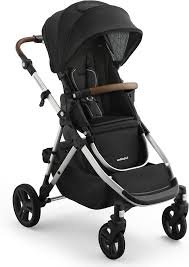
These strollers are considered the workhouse of the baby gear in the world. It is designed as a primary ride from infant to toddler years; the main priority of these models is the comfort, durability, and robust storage over light weight. It includes heavy-duty frame construction, big seating space, under-seat storage baskets, canopy coverage and multi-position reclines.
It is durable and has amazing suspension systems and smooth manoeuvrability, which is created to hold the daily wear and tear for years.
The only drawback is the bulky frame, which has a huge weight of 20 to 30 lbs and takes up a lot of space.
Ideal For: Parents who go for daily errands, parks or neighbourhood strolls where they don’t need to lift the stroller.
Lightweight & Travel Strollers
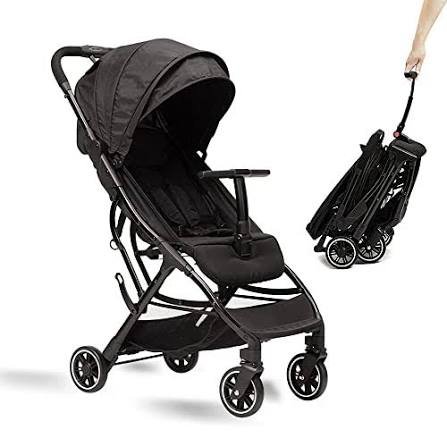
These strollers are also known as umbrella or travel strollers; they prioritise minimalism, compact footprint, and easy transport. They are also light in weight, so there is no bulky frame component. Lightweight & Travel Strollers have a weight of 11 to 15 lbs, tri-fold or umbrella-style folding mechanisms, narrow frame width, and a compact fold which is perfect when you try to fit it in tight spaces.
The main benefit of these strollers is that they are easy to lift, store and carry; many models even fit in aeroplane bins.
The only disadvantage is these strollers have smaller plastic or EVA wheels, which means they can’t go smoothly on rough pavement, have limited basket capacity and have less seat recline.
Ideal For: If you are going to frequent flyers, public transit commuters, or quick errands and want to place a stroller in the car trunk, these are best.
Modular & Convertible Strollers (Single-to-Double)
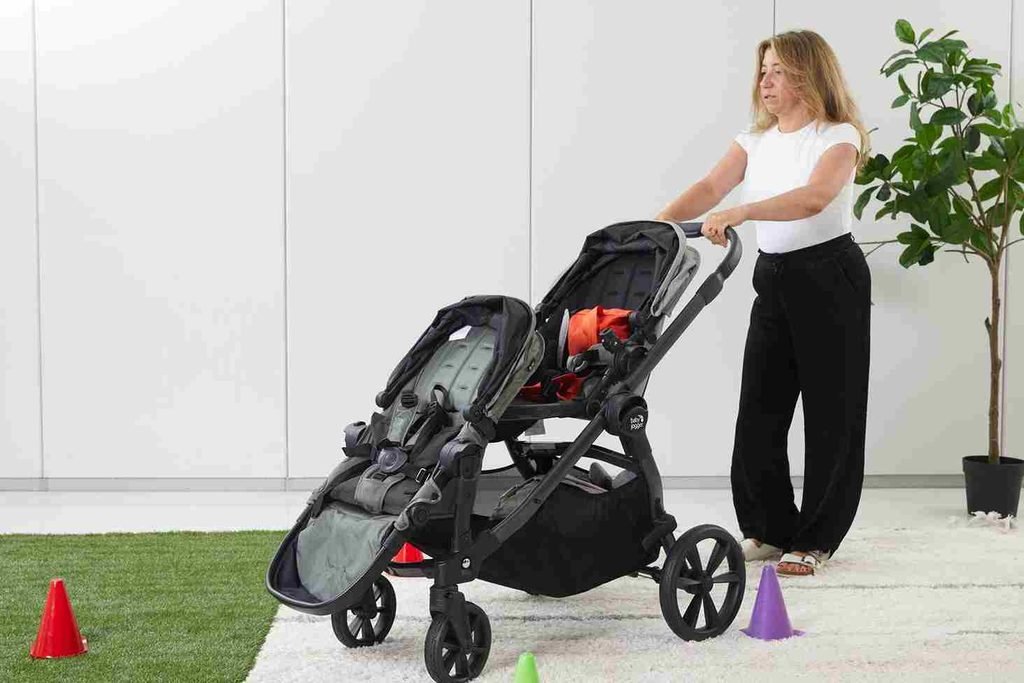
Convertible strollers are something that easily last according to family plans because they start as a single stroller but have feature extensible frames where a second or even third seat configuration takes place. The main characteristics of these strollers include a heavy-duty modular frame, multiple seating arrangements and high weight capacity limits.
The main advantage of these strollers is they can be a long-term investment, so you don’t need to buy a new double stroller when you plan for the next baby.
The main disadvantage is the high cost and heavy baseline frame, which can be a big task when you try to move a stroller having 2 toddlers.
Ideal For: if you have one toddler and are planning to have another baby in coming years, then these strollers are a perfect investment for you.
Jogging & All-Terrain Strollers
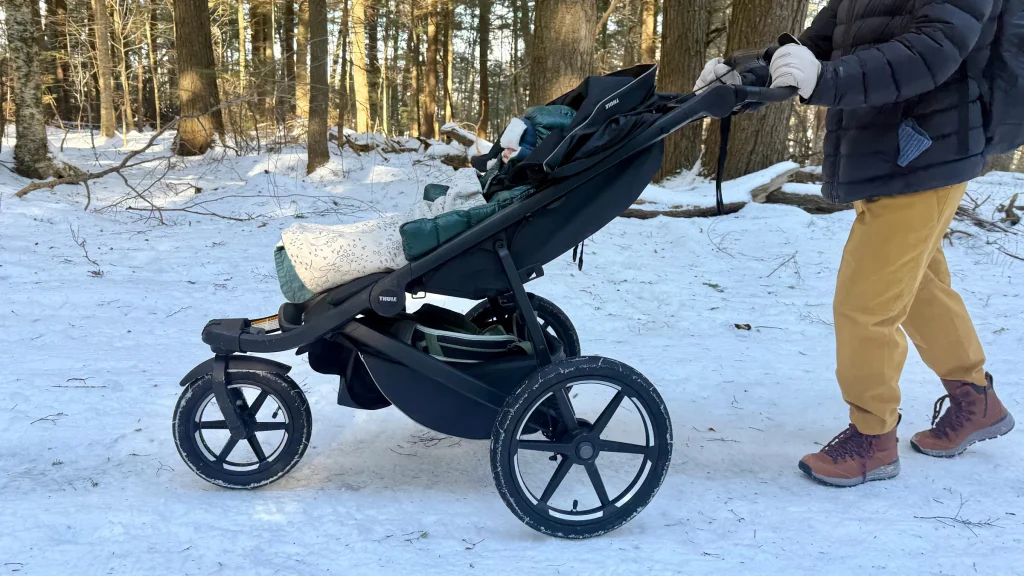
These strollers work perfectly for parents who are active and take strollers to rough environments. The wheel of jogging and all-terrain strollers are large, air-filled pneumatic tyres and high-performance suspension systems. It includes a single front wheel with two wheels in the back, air-filled rubber tyres, and brakes that can be easily handled by hands. Wrist safety tethers and heavy-duty shock absorbers mean you can take it easily at unbalanced surfaces.
The main advantages of these strollers include smoothness on gravel, dirt, grass, and cracked pavement.
The main disadvantages include it having a very large and heavy frame and the front wheel needing to be locked when running, which can minimise indoor turns
Ideal For: Perfect for parents who are runners, outdoor enthusiasts, hiking families, or living in rural or unpaved areas.
Travel Systems (Car Seat Combos)
A travel system gives you a complete package that includes an infant car seat, a stay-in-car base, and a full-size or lightweight stroller base, so many parents consider it to buy instead of just one baby tool. These travel systems have a click-in mechanism, which means you can add an infant car seat into a stroller frame without even removing the baby from it.
The main advantage of these travel systems is that they are very affordable, as you are getting many things in a bundle.
The only disadvantage is the baby grows faster in the first year, so after that time the car seat will not be useful for them; however, the stroller frame can still be in use.
Ideal For: Perfect for suburban parents who use the car many times in a day and need a simple solution for the baby.
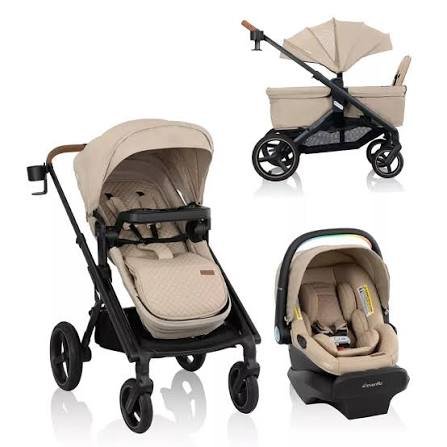
Step 2: Key Features to Evaluate Before Buying
Once you understand which stroller works best for you, now it’s time for you to evaluate the technical and ergonomic details of all the models.
Safety Features & Age Appropriateness (0–6 Months vs. Toddler)
It is very important for the safety of the child during the first months, so knowing the age limits will help to keep the child safe from any danger.
Newborn Stage (0 to 6 Months)
When a baby is under 6 months, they don’t have control over their head and neck, and they can’t sit upright. At this stage you have to take a lot of care, so avoid placing them into a standard upright stroller seat, as it increases the risk of positional asphyxiation because the baby’s airway can collapse if a baby falls on their chest.
A newborn stroller must include one of three configurations, like a 180-degree lie-flat recline seat, an approved and laid-flat bassinet, or an infant car seat adapter system.
Toddler Stage (6 Months+)
Once a baby is 6 months old, they have a grip on their head and neck, so at this stage you can look for a 5-point harness (straps over both shoulders and hips and between the legs) with a buckle mechanism. You also need shoulder-height slots that are adjustable so the harness scales fully as the child grows. Additionally, look for a stroller that has sun and canopy protection too.
Wheel Types, Suspension, and Terrain Performance
The quality of a stroller wheel is also important, as it helps to understand how much physical strength you will need to push it and how a child will get a smooth ride.
EVA Foam Wheels: This type of wheel is lightweight, in a low budget, and puncture-proof. However, they are rigid and transmit every bump into the frame. These wheels work best on smooth paths like malls and grocery stores.
Polyurethane (PU) Rubber Wheels: These types of wheels are much denser and more resilient as compared to EVA. They provide a good balance of durability, puncture resistance, and moderate shock absorption. Works best on rough paths.
Pneumatic Air-Filled Tires: These types of tires are filled with air, similar to bicycle tires. They have natural shock absorption and work smoothly on grass, mud, sand, and gravel; however, they need maintenance like tire refills, etc.
Fold Mechanism, Weight, and Folded Dimensions
how a stroller moves is important, another thing is how the stroller behaves when it is not in use.
Fold Mechanics: Always look for a one-hand or auto-folding mechanism if you hold the baby. Before buying a stroller, test if it stays upright on its own when folded, as this feature will save the stroller from getting dirty and make it easy to store in a closet.
Weight Considerations: If you are living in an apartment or traveling in an SUV on a daily basis, then you need a stroller that has less weight, like under 20 lbs. If you reside in a building with easy access to a lift, a 22-lb stroller is also a suitable option.
Folded Footprint: Before buying a stroller, always measure the car trunk dimensions or closet depth, then compare which stroller would be suitable.
Storage Capacity, Handlebar Ergonomics, and Accessories
Other things you need to look at in a stroller include the capacity of the basket, handlebar ergonomics, and essential accessories. Always check for baskets that have a weight of 10 to 30 lbs. A large basket is useless if you don’t want to put diapers or any other thing in it. If you and your partner have a noticeable height difference, then look for strollers that have a telescoping handlebar instead of a rotating/flip handlebar. When you buy a stroller, avoid buying extra stuff like rain shields, bumper bars, snack trays, cup holders, and car seat adapters.
Step 3: Match Your Stroller to Your Specific Lifestyle
To get a perfect stroller, you need to match it with the specific lifestyle as follows:
City Dwellers & Public Transit Users
If you live in cities where there are narrow store aisles, curbs, subway stairs, compact apartments, and crowded sidewalks. You need features like narrow axle width, which is under 23 inches; easy management by a single hand; a lightweight frame; alone-standing capability; and wheels that are puncture-proof.
Recommended Stroller Class: Premium Lightweight / Urban Compact Stroller.
Avoid double or bulky strollers with rear wheels, as they can easily get stuck in subway turnstiles.
Suburban Drivers & Daily Trunk Loaders
If you are someone who travels daily in a car and drives to parks, shopping centers, daycare, and family outings, then the stroller needs to have a fast trunk-folding system, a large basket, and durable suspension.
Recommended Stroller Class: Full-Size Modular Stroller or Integrated Travel System.
Avoid minimalistic umbrella strollers, as they don’t have space for diaper bags.
Active Parents & Outdoor Enthusiasts
If your daily routine includes jogging, morning trail runs, camping, or walking through unpaved park paths, then standard urban strollers are not recommended. Always go for a stroller that has features like 16-inch air tires, lockable front wheels, a brake you can operate by hand, an adjustable wrist strap, a deep canopy, and heavy-duty frame coil suspension.
- Recommended Stroller Class: Dedicated Jogging / All-Terrain Stroller.
Avoid small-wheel travel strollers, as they can’t work well on small roots, rocks, and sidewalks.
Growing Families (Twins & Close-Age Siblings)
If you have many children, then seating them together is the first thing you have in mind. For this you need a single-to-double module where seats are arranged in tandem. When the children sit next to each other, they will get equal views, identical recline angles, and easier steering; however, these side-by-side doubles may not fit in narrow door frames.
Quick-Match Decision Matrix
Use this quick matrix to compare categories side-by-side:
| Stroller Category | Best For | Typical Weight | Age Range | Primary Advantage | Key Limitation |
|---|---|---|---|---|---|
| Full-Size | Everyday neighborhood walks & errands | 20–30 lbs | Birth (with bassinet) to 50+ lbs | Sturdy, comfortable, large storage | Heavy, bulky folded size |
| Lightweight / Travel | Public transit, travel, quick errands | 11–15 lbs | 6 months+ (unless car seat compatible) | Fits overhead bins, ultra-portable | Minimal suspension, small wheels |
| Modular / Convertible | Families planning for a second child | 26–35 lbs | Birth to 50 lbs per seat | Expands from single to double | Expensive, heavy as a double |
| Jogging / All-Terrain | Running, hiking, rough sidewalks | 25–32 lbs | 6 months+ (for jogging speeds) | Superior shock absorption on trails | Large folded footprint, bulky |
| Travel System | Suburban drivers & newborn phase | 20–28 lbs | Birth to 30 lbs (car seat limits) | Direct car-to-stroller transition | Outgrown once baby leaves car seat |
Stroller Safety Standards & Maintenance Checklist
Buying a stroller is one thing; another is the basic maintenance it needs so a child stays safe and it performs in the long term.
- Certifications: Make sure what you are buying meets the ASTM International safety standards. Always look for the JPMA certification if you are buying a stroller in the US and the EN 1888 certification if you are in Europe.
- Brake Checks: Before buying, always check that the foot pedals click fully into place.
- Harness Adjustment: Make sure the shoulder straps are above the kid’s shoulders when forward-facing so you can readjust the harness according to child growth.
- Weight Limits: Avoid hanging any heavy bags on the handlebar unless the manufacturer approves that you can.
Routine Maintenance Schedule
Always clean the stroller wheel and axle on a monthly basis. For this you need to wipe down wheel rims and clean anything that is in them, like hair, lint, and dirt buildup from the axle. You can also apply silicone-based spray on wheels to save them from squeaking.
Fabric Spot Cleaning: You can clean it with water, mild dish soap, and a soft cloth. Avoid harsh chemicals and detergents you use in the machine.
Pneumatic Tire Pressure (Biweekly): If the stroller has airtight wheels, then always check PSI levels with the help of a tire gauge and refill the gas with the help of a manual hand pump. Avoid taking strollers to high-pressure gas stations.
Frame Fastener Inspection: Inspect rivets, screws, and folding hinges to make sure they are not loose with time.
| Common FAQ Question | Where to Put It in the Body Code | Integrated Heading / Placement |
|---|---|---|
| Can I use a regular stroller for a newborn? | Step 2: Safety & Age Appropriateness | Add a bold callout under the 0–6 Months section. |
| Do I need a true jogging stroller to jog? | Step 1: Jogging Strollers | Include a warning box under the Jogging & All-Terrain subsection. |
| How long do kids use strollers? | Step 2: Weight & Ergonomics | Add a note on weight capacities and child age limits under Seat Specs. |
Also Read: When Can Babies Sleep With a Blanket? Safe Sleep Guidelines

One thought on “How to Choose a Baby Stroller: Ultimate Buyer’s Guide”
Comments are closed.